No, the PS5’s Power Saver mode likely isn’t paving the way for an unknown handheld device, but it’s still quite remarkable
The buzz surrounding Sony’s potential next-generation PlayStation handheld continues to grow. This speculation began over a year ago when reports surfaced indicating that Sony was preparing a portable version of the PlayStation 5, likely in an effort to compete with Nintendo’s dominance in the handheld market.
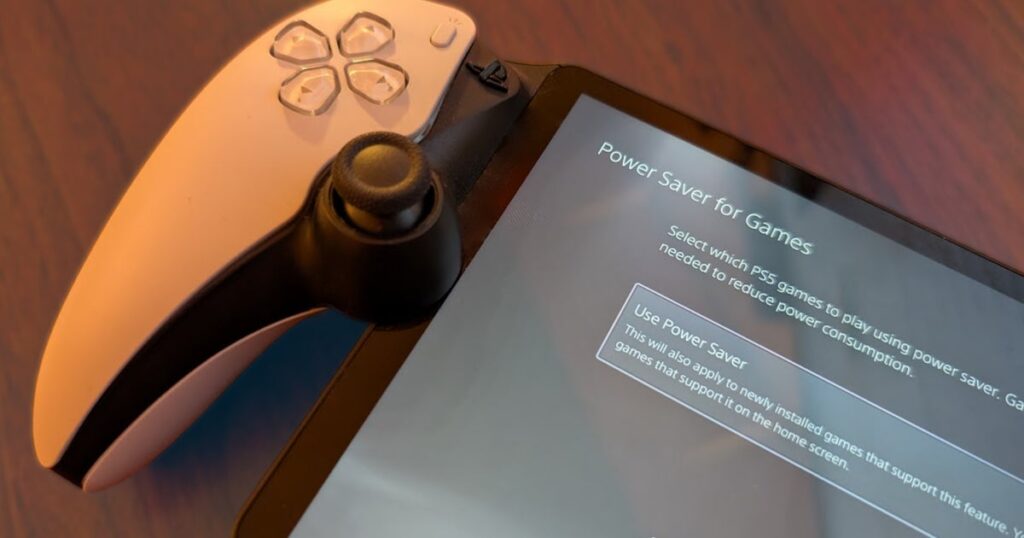
In June, credible technical specifications for this new device emerged, sparking discussions about the feasibility of a PlayStation handheld console. Recently, a firmware update introduced a new Power Saver mode for the PS5, contributing to Sony’s ongoing commitment to eco-friendliness exhibited in various PS5 models, each designed with energy conservation in mind.
This new Power Saver mode is noteworthy as it applies across the entire PS5 lineup and specifically targets certain games, including Death Stranding 2, Demon’s Souls, and Days Gone Remastered. Social media was flooded with speculation last week suggesting that this mode might indicate Sony’s preparations for the next-generation PlayStation or its handheld counterpart, although a recent video from Digital Foundry challenges this notion.
According to Digital Foundry, this energy-saving mode primarily aims to lower greenhouse gas emissions, requiring developers to adjust their games to operate on a reduced power profile—often achieving a 50% reduction in energy consumption. However, the throttled performance resulting from this mode places the PS5 in a similar power state to rumored specifications for the upcoming handheld.
The power consumption can drop significantly, with some games utilizing around 100W, which is still too high for a handheld device that ideally should operate within a 15W range for compatibility with standard portable batteries. Notably, Days Gone Remastered effectively runs at reduced power levels with minimal adverse effects on performance, although Demon’s Souls requires its frame rate to be cut from 60fps to 30fps.
In simpler terms, this Power Saver profile alone cannot ensure that PS5 games can be adapted for handheld use. Rich Leadbetter from Digital Foundry suggests that this mode might help developers understand the constraints necessary for the handheld’s performance, potentially serving as a testing ground for future technologies.
Last week, when questioned about the prospect of a new handheld device, former PlayStation executive Shuhei Yoshida acknowledged that the concept would appeal to those with extensive game libraries on PS4 and PS5.
In addition to the handheld discussions, there has been significant speculation about the broader future of PlayStation. Recently, PS5 system architect Mark Cerny and AMD senior vice president Jack Huynh released a video discussing new technologies, which hints at expectations for the PlayStation 6. Yoshida also mentioned that Sony must explore new directions to achieve success with its forthcoming hardware.
As it stands, Sony has not officially confirmed any details regarding either the PlayStation 6 or a next-generation handheld device.