Cloud gaming in 2024: Overview of the best services and how to choose the optimal option
Discover the benefits of cloud gaming and the best services of 2024. Overview of NVIDIA GeForce Now, Xbox Cloud Gaming, Amazon Luna, and more. How to choose the optimal service for yourself?
Cloud gaming in 2024
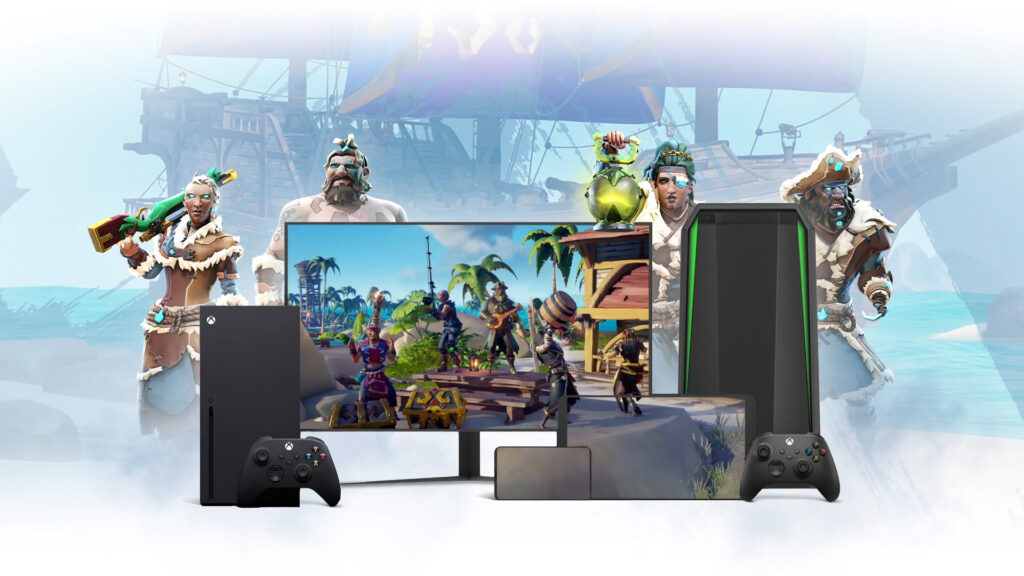
A few years ago, the idea of playing the latest video games without a powerful computer or console seemed like a fantasy. However, in 2024, cloud gaming has become a reality, gradually transforming the entire industry. Today, all you need is a stable internet connection, and you can enjoy modern AAA titles even on a modest laptop or smartphone.
Let’s take a look at how this technology has evolved, its key benefits, and the top cloud gaming services of 2024.
What is cloud gaming and why is it important
Cloud gaming is a technology that allows you to play video games hosted on remote servers. The player only receives the video stream of the game, while all the computations are done on powerful server farms. Your commands are sent to the servers, and the result is displayed on your device screen.
This approach has several key advantages:
- Accessibility: Players no longer need to buy expensive consoles or computers. All the necessary computing power is provided by the server, so even on a mid-range laptop, you can enjoy high-end games.
- Mobility: You can play anywhere you have a stable internet connection. There is no need to be tied to a specific place or device.
- Updates: Players always have access to the latest versions of games and updates. There is no need to worry about hardware compatibility with new releases.
The evolution of cloud gaming
The idea of cloud gaming is not new. It emerged in the 2000s, but at that time, the technology was not ready for commercial use. Early attempts to stream games over the internet faced serious obstacles—low network bandwidth, high latency, and poor image quality.
The first steps in this direction were made by services like G-cluster and OTOY, which introduced their initial products back in 2003 and 2008. They demonstrated the potential to stream games on devices with limited capabilities. However, due to technical constraints, the idea did not gain widespread popularity.
In the early 2010s, players like OnLive and Gaikai entered the scene. OnLive was the first service to attempt to commercialize cloud gaming on a broad scale. Although the service couldn’t compete due to high costs and technical difficulties, it became a significant milestone in the development of this technology. Gaikai focused on streaming through web browsers, allowing users to try games before purchasing them. This approach appealed to Sony, which acquired Gaikai in 2012 and used its technology to create PlayStation Now.
Modern cloud gaming services
After several years of experimentation and refinement, cloud gaming reached a new level in 2018 when Google announced Stadia. Although the service faced challenges at launch, it paved the way for other major companies like Microsoft and Amazon to introduce their platforms. Today, cloud gaming offers users a wide range of services with various conditions and features.
NVIDIA GeForce Now
NVIDIA GeForce Now remains one of the most popular cloud gaming services, actively developing in recent years. The service supports various platforms, including Windows, macOS, Android, and even Chromebook.
- Advantages:
- Support for ray tracing in compatible games.
- A free plan that allows users to try the service with certain limitations.
- Regular updates and service improvements.
- Disadvantages:
- Session time limits on the free plan.
- Not all games are supported due to licensing restrictions.
Xbox Cloud Gaming (xCloud)
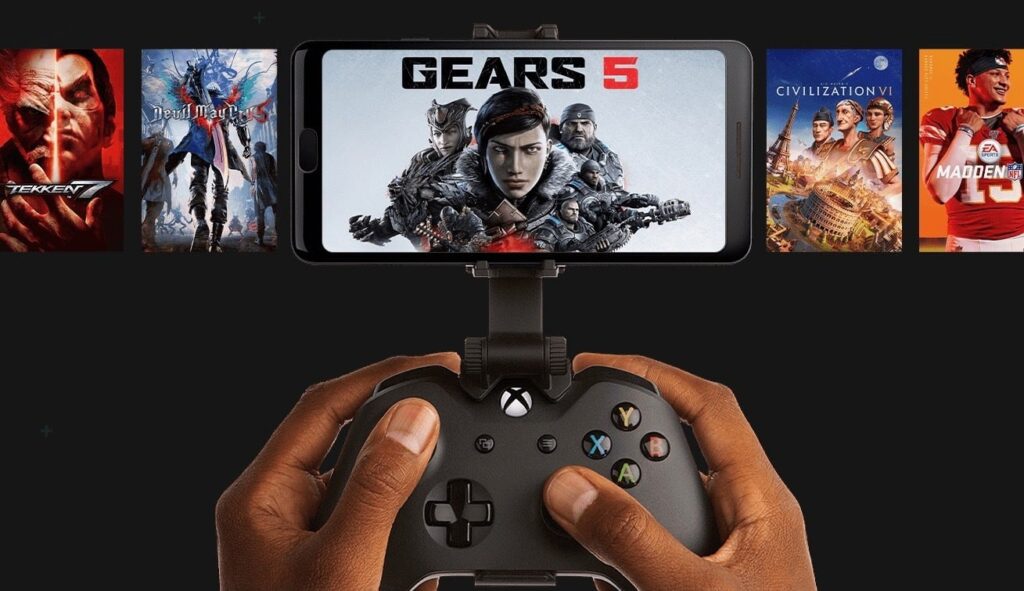
Microsoft has integrated its cloud gaming service with the Xbox Game Pass Ultimate subscription, providing access to a vast library of games. Xbox Cloud Gaming supports Windows, Android, iOS, and Xbox consoles.
- Advantages:
- Large game library for a fixed price.
- Progress synchronization across different devices.
- Integration with the Microsoft ecosystem.
- Disadvantages:
- Requires a Game Pass Ultimate subscription.
- Streaming quality depends on the region.
Amazon Luna
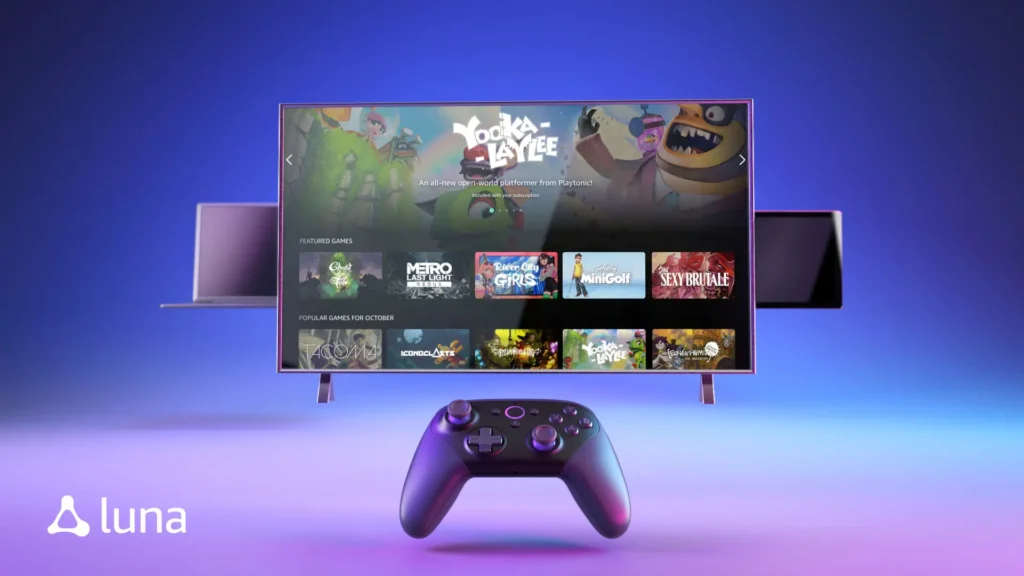
Amazon Luna stands out from other services with its flexible subscription system. Users can choose channels with games that interest them, such as Ubisoft+ or Family.
- Advantages:
- Flexibility in content selection.
- Integration with Twitch, simplifying streaming and interaction with viewers.
- Support for various devices.
- Disadvantages:
- Not available in all countries.
- Additional costs for different channels.
Boosteroid
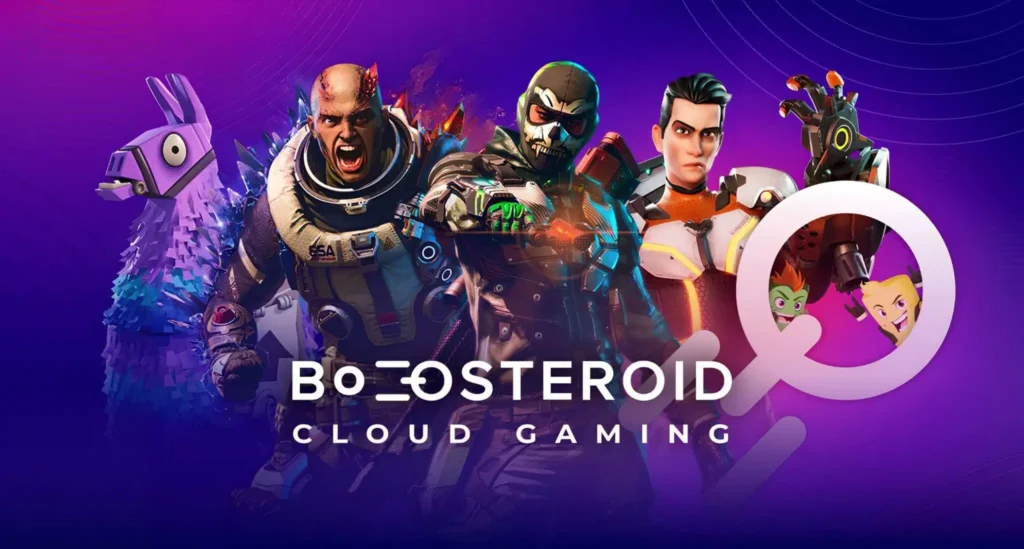
The European service Boosteroid is gaining popularity among gamers due to its affordable price and high-quality streaming in supported regions. It is particularly attractive to users in Eastern Europe, including Ukraine.
- Advantages:
- Local servers provide low latency for regional users.
- Affordable subscription price.
- Support for the Ukrainian language.
- Disadvantages:
- Smaller game library compared to competitors.
- Requires users to own the games they want to play.
PlayStation Plus Premium
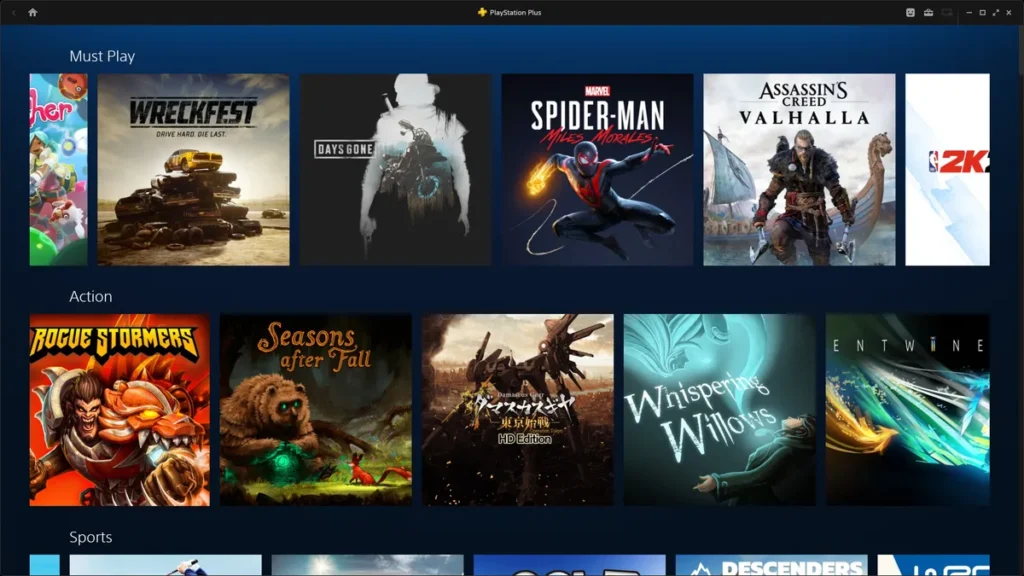
Sony has revamped its subscription service, combining PlayStation Now and PlayStation Plus, giving users access to the PlayStation library, including classic titles.
- Advantages:
- Extensive library of high-quality games.
- Integration with the PlayStation ecosystem.
- Regular addition of new games.
- Disadvantages:
- Higher price for the premium tier subscription.
- Limited platform support.
Shadow
Shadow offers users a complete remote computer with high specifications. This is more than just cloud gaming, as you get access to a powerful PC that can be used for any task, including VR gaming.
- Advantages:
- Full control over the remote PC.
- High graphics quality and performance.
- Support for various devices.
- Disadvantages:
- Higher price compared to other services.
- Requires a fast and stable internet connection.
How to choose the best service for you
When choosing a cloud gaming service, there are several key factors to consider:
- Budget: Determine how much you are willing to spend per month. Subscription prices can vary significantly.
- Availability: Check if the service is available in your region and what the connection quality is like.
- Game library: Assess whether the service offers the games you want to play.
- Device support: Find out if the service supports your devices.
- Internet connection: Make sure your internet connection is fast enough for stable gaming.
Tips for optimal experience
- Use a wired connection to minimize latency.
- Close background apps to reduce the load on your device.
- Check streaming quality settings and adjust them to your internet speed.
Technical requirements and internet connection for cloud gaming
One of the main advantages of cloud gaming is the ability to play the latest games without high-end hardware. However, a reliable internet connection is crucial for ensuring a quality gaming experience. Let’s take a closer look at the technical requirements and the internet connection features necessary for seamless cloud gaming.
Minimum and recommended internet requirements
To play cloud-based games without lag or loss of quality, you need a stable internet connection with high data transfer speeds. Here are the main indicators to consider:
- Download Speed:
- Minimum: 10 Mbps (for gaming at 720p resolution).
- Recommended: 20-25 Mbps (for 1080p) and 50 Mbps or higher (for 4K).
- Upload Speed:
- Although most of the data is streamed to you (game video stream), some services require a stable upstream connection from your device.
- Recommended: at least 5 Mbps to avoid lag in transmitting commands.
- Latency (Ping):
- This is the time it takes for data to travel from your device to the server and back. Low latency is critical for real-time games, especially shooters, racing games, and MOBAs.
- Minimum Requirement: up to 50 ms.
- Recommended Requirement: up to 20-30 ms for optimal gaming without noticeable delays.
- Connection Stability (Packet Loss and Jitter):
- It’s important to have a stable connection without packet loss and minimal jitter (variations in packet delay).
- Recommended: packet loss should be 0%, and jitter values should not exceed 10 ms.
The impact of 5G technology on cloud gaming
With the advent of 5G technology, a true breakthrough in cloud gaming is expected. 5G offers significantly higher data transfer speeds and lower latency compared to 4G and other communication standards. Key advantages of 5G for gamers include:
- Low Latency: 5G technology promises latency as low as 1 ms, which is virtually imperceptible to the human eye and ensures a smooth gaming experience.
- High Speed: The theoretical maximum download speed reaches up to 10 Gbps, allowing you to play even the most demanding games in 4K or 8K resolution without any issues.
- Stability: Thanks to a higher number of base stations and the use of Beamforming technology, 5G provides a stable connection even in crowded areas.
However, it’s worth noting that the implementation of 5G takes time, and currently, this technology is not available in all regions, while the equipment required for its use is still quite expensive.
Fiber-optic internet as the best option
Fiber-optic internet is currently the best solution for cloud gaming. Its main advantages are:
- High Speed: Most providers offer speeds of up to 1 Gbps, which is more than sufficient for any gaming needs.
- Low Latency: With direct connection and minimal losses at intermediate nodes, fiber-optic internet has minimal latency values.
- Reliability: Unlike copper cables or mobile internet, fiber-optic is less susceptible to external factors like weather conditions or electromagnetic interference.
Cloud gaming use in different regions
The level of internet infrastructure development varies significantly in different countries and regions, affecting the quality of cloud gaming. Let’s consider several factors:
- Developed countries with advanced infrastructure:
- In countries like Europe, North America, South Korea, and Japan, cloud gaming is becoming increasingly popular due to high internet speeds and widespread 5G coverage.
- Gamers in these countries have access to services with minimal latency and high-quality visuals.
- Developing countries:
- In countries with less developed internet infrastructure, such as some regions of South America, Africa, or Asia, cloud gaming quality may be lower due to unstable connections and high latency.
- For these regions, local services like Boosteroid are a good option as they consider the specific characteristics of local networks.
- Rural areas accessibility issues:
- In many countries, there remains a challenge of providing remote and rural areas with high-speed internet. This limits the possibility of using cloud gaming in such locations.
- The emergence of satellite internet (e.g., Starlink) could potentially solve this problem in the future, providing high speed and stable connection even in hard-to-reach regions.
Tips for improving connection quality
- Use a wired connection: It is more stable than Wi-Fi and provides lower latency.
- Choose routers with gigabit support and QoS (Quality of Service): This helps prioritize gaming traffic.
- Check DNS settings: Choosing a faster DNS server can slightly reduce latency.
- Upgrade your equipment: Old modems and routers can cause poor connection quality.
The future of cloud gaming
With the development of 5G and fiber-optic networks, cloud gaming is becoming more accessible and high-quality. In 2024, we see this technology transforming into a full-fledged alternative to traditional consoles and PCs.
Trends to watch out for:
- Geographical expansion: Services are becoming available in more countries.
- Quality improvement: Support for 4K and even 8K streaming.
- Integration with VR and AR: Cloud gaming could become key for the development of virtual and augmented reality.
Conclusion
Cloud gaming opens up new opportunities for players. It makes games more accessible and convenient, expanding the audience and allowing players to enjoy their favorite projects without limitations. If you haven’t tried any of these services yet, now might be the time to dive into the world of cloud gaming and experience its benefits firsthand.